Merry Christmas 2011
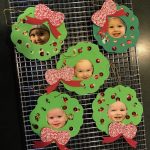
Merry Christmas and a very Happy New Year from me and “my” child care family.
Aren’t they all just too cute for words?!
When is Your Child too Sick for Child Care?
One of the hardest things about being a parent is trying to figure out what to do when your child is sick. How sick are they? Is it just a cold or is it more serious? Should you call the doctor or wait another day? Should they stay home from school or child care?
When deciding whether to keep your sick child home from school or child care, remember that germs spread very easily in school and child care settings. Children are constantly touching each other, coughing or sneezing near each other, trading toys or other items, and are overall more likely to spread or catch an illness than adults are. When you also consider that children are still developing good sanitary habits covering coughs and sneezes, using tissues instead of hands for runny noses, etc, it’s easy to see why keeping a sick child home may be the better choice.
Most schools and child care programs have policies that state when a sick child should be kept home, so make sure you’re familiar with your program’s policies. If in doubt, here are some common-sense reasons to keep a child home:
- Unusual spots, rashes or bruises unrelated to an injury
- Extremely sore throat with difficulty swallowing
- Impetigo or infected skin patches
- Unusually dark (tea-colored) urine
- Fever
- Headache and stiff neck
- Vomiting – for any reason
- Diarrhea – for any reason
- Crankiness, general discomfort, seems unwell, cries more than usual
- Ear ache
- Child does not feel well enough to participate in child care program’s activities
Consider the other children at school or child care, and their families. Bringing a sick child to school or child care may cause other children to become ill, and that illness may spread to their family members. If all parents keep their sick children at home everyone will stay healthier, which will result in fewer lost work days and a healthier environment for everyone.

Image credit: www.sxc.hu/profile/Mrinkk
Childhood Nutrition Training
Almost every month our Valley AEYC meeting includes continuing education, and last month’s training was Childhood Nutrition by my friend Dorothy and one of her co-workers, Sarah.
When I met Dorothy eight years ago she was morbidly obese – weighing over 350 pounds – was diabetic, had high blood pressure, and suffered from joint trouble.
After numerous unproductive efforts to lose weight and regain her health, Dorothy underwent gastric bypass surgery. It wasn’t an easy decision, and wasn’t an “easy out” by any means; it was simply another tool to use along with increased exercise and a healthy diet to lose pounds and maintain a healthy weight. Over time she’s lost 200 pounds, regained a healthy blood pressure, gotten rid of diabetes, and no longer has joint problems.
She’s also discovered a passion for promoting childhood nutrition and preventing childhood obesity.
Since good nutrition is also one of my passions I wanted to pass on what I learned at the training. Dorothy graciously sent me her notes so I could get the facts straight and gave me permission to take photos and write about the training – as long as there were no butt shots. Don’t worry Dorothy – I won’t post any photos of anyone else that I wouldn’t want posted of me!
Things I learned from Dorothy…
Basic Principles of Childhood Nutrition
- Eating – along with warmth, shelter, and sleep – is a basic biological need for all humans. Healthy eating habits are important for adults and vital for children’s growth and development.
- Since young children rely on adults to provide their food, adults have a moral and ethical responsibility to understand how nutrition affects children’s growth and development, and to provide the most nutritious foods they can.
- Some of the reasons for children to learn about good nutrition are to encourage them to develop positive attitudes about food, to help them enjoy a wide variety of foods, and to help them establish healthy eating habits when they’re young.
- Learning to like new foods is important because a wide variety of foods provides a wider source of nutrition.
Tips for Providing Nutritious Meals and Snacks:
- Choose unprocessed or minimally processed foods whenever possible; like fresh fruits and vegetables instead of canned.
- Prepare foods “from scratch” instead of buying boxed mixes.
- Read labels! Choose foods that are low in added sugar. Be careful; sugar comes in many disguises. Watch out for anything ending in “ose” like fructose, sucrose, lactose, glucose, dextrose, etc.
- Use solid fats – ie shortening and butter – and salt sparingly.
- Replace jam and jelly with fruit butters or all-fruit spreads, or omit them entirely.
- Switch children two and older to fat-free or 1% milk. And make the switch yourself, if you haven’t already. It’s an easy way to cut down on fat and calories.
Tips for Introducing New Foods
- Children are more likely to try a food that they’ve helped prepare themselves.
- Children often need to be exposed to a new food 12-15 times before accepting the food.
- Introduce new foods at the beginning of the meal when the child is more hungry.
- Children love to dip so provide something for children to dip new foods in. Favorites at our house include Ranch dressing, ketchup, barbeque sauce, and yogurt.
- Gently encourage, but don’t force, children to take a “practice bite” of the new food. But don’t make a big deal of it or you’ll end up with a power struggle you can’t win.
- Allow children to politely take a new food out of their mouths if they don’t like it; sometimes we adults do this with things we don’t like too.
- Allow the children to express their dislike of a new food, but encourage them to be polite about it. Not everyone likes every food, and that’s OK.
- Be a good role model; eat a wide variety of foods, and show enthusiasm when trying new foods.
This is where we got to the really fun stuff – trying the healthy foods Dorothy had prepared for us.
Let’s eat!
Crunchy Hawaiian Chicken Wraps: made with whole wheat tortillas or lettuce leaves for the carb-conscious.
These were REALLY good – I’d definitely serve them to the child care or our family!
Sliced apples for…
I have to admit I wasn’t fond of the dip; I’d rather eat straight PB on my apples, or just eat them plain. Lots of the other people at the training liked it though.
Zucchini Frittata; made in the oven so there’s less mess.
I love zucchini, Parmesan, eggs… so I obviously liked this one! The neat thing is that you can switch it up by using different veggies, like spinach, tomatoes, summer squash, etc, etc, etc.

Homemade Dorothy-made hummus.
I just recently learned to like hummus so I’m still a bit picky about what kind I like. Dorothy’s was good, but a bit too peanut-buttery for me; I prefer Teacher’s more garlicky version that uses tahini instead of peanut butter.
Colorful peppers to dip in the hummus.
To be honest, I’m a poster child for the “12-15 tries” rule. When I was a kid I hated peppers, but I kept trying them and now I love them. Well, I love red, orange and yellow peppers; I’m still learning to like the green ones.
Tuna Joes – made by replacing the hamburger in traditional Sloppy Joes with tuna.
It was pretty good, but I missed the texture hamburger has so I’ll stick to my hamburger or ground turkey Joes for now.
On the left is Hawaiian Beanies without Weenies: made by adding pineapple to canned pork and beans. I wasn’t fond of it, but I’m not fond of warm pineapple or sweet/sour flavors.
On the right is the thing I’d heard about for so long but was afraid to try: Italian Tuna. Dorothy had been raving about it for I-don’t-know-how-long, claiming that not only is it healthier than spaghetti and meatballs, but that the kids in her center like it a lot too. I was skeptical that pasta, spaghetti sauce and tuna would taste good together, but I was willing to try it. And I’m willing to admit I was wrong – it is good! I’d imagined a much saucier dish, but Dorothy found a good balance of sauce and tuna so it’s not too fishy or too saucy. I’d consider serving it to the child care, or even at home maybe.
All in all, I think the night was a success: not only did we all learn more about promoting childhood nutrition, we also had fun tasting different foods and discovering new recipes to try in our programs.
Thanks Dorothy and Sarah!

Lots of Fun with a Little Fondue
It’s May, which means it’s Valley AEYC Annual Dinner time!
This year the dinner was held at the Melting Pot – a fondue restaurant I’ve wanted to try for a while.
The committee chose a Pampering theme, and had a box of luscious truffles at each place setting.
Smile! We had a smaller group than usual, but it was tons of fun anyway.
Angie, our Vice President and Dorothy, our newly-elected President.
Me I’m the Secretary and Carie.
After a brief business meeting it was time for some door prizes; the Dinner committee always has great prizes, and this year was no different! Everyone put their name in a basket and when your name was picked you could choose a prize. Since all the prizes were in identical paper bags you wouldn’t know what was inside until you opened it.
I love surprises – don’t you?
The waitress picked our first lucky winner: Julie!
Next, Michelle!
And Carie!
The committee had prizes for everyone, and a grand prize at the end.
Nicole’s door prize was the most fun… all night the committee members who had shopped for the prizes were cracking jokes about one of the door prizes being a bra.
I didn’t get it until she opened her prize…
It’s a sleep mask called “40 Winks” because you can blink your eyes underneath.
Looks like a bra to me too!
Of course you can’t go to a fondue restaurant without dipping something in chocolate; I think it’s even a rule.
This is called the Snickers: milk chocolate, caramel and peanut butter. Yummmmm!
Look at all the goodies just waiting to be dipped in chocolate! My favorites were the brownies, strawberries, and bananas.
And a good time was had by all.
I can’t wait to see where next year’s Dinner will be held!

Homemade Bath Salts Recipe
When I posted about the homemade Mother’s Day card we made this year I mentioned that Mother’s Day had sneaked up on me so I was left scrambling for a card idea.
Obviously I had to scramble for a gift idea too.
I’m picky about the gifts I give to parents, and never give a gift I wouldn’t want to receive. If you like crumpled tissue paper and paper doily “brooches” you’re out of luck here; they’re not my style!
The challenge this year was to find a gift that the children could make, that could be completed in less than two days – including drying time – and that moms would actually like to receive.
Luckily it didn’t take long for me to find the answer: homemade bath salts!
I had epsom salts, lavender essential oil and lavender buds on hand; all I needed was some sort of container to put the bath salts in. After a brief search turning my house upside-down, I decided to pick up some small canning jars at the grocery store.
If I’d had more time I would’ve gotten decorative jars from a craft store, but since I was in a time crunch and we had to get groceries anyway I decided the canning jars were perfect. They were definitely better than the cobwebby plastic storage containers in the basement that were my last resort.
I estimated that about one cup of homemade bath salts would fit in each jar and I needed five gifts, so the children took turns pouring one cup of salt into the bowl until we reached five cups of salt.
According to the recipes I found online, instead of epsom salts you could use sea salt or kosher salt, or any combination of the three.
I added about 15 drops of lavender essential oil and had the children take turns stirring. I wanted to make sure it was mixed in well so we wouldn’t have one over-scented jar and four without any scent!
Next I added about 3/4 cup of dried lavender buds and had each child give it a stir. It was tricky to get it stirred evenly – the lavender buds are so much lighter than the salt that they kept “floating” to the top.
Each child held the funnel into their jar as I spooned the bath salts in.
I had Little Guy go first as an example for the younger children.
All done!
I can’t decide if they’re pretty, or if they look bug-infested. Next time I’m going to use less lavender buds – maybe start with 1/4 cup and add more if needed.
All they need now is a bow!
I usually like to have the children make the wrapping paper for their parents’ gifts. Paper lunch bags are the perfect size for the ladybug cards and the jars of homemade bath salts so I gave the children markers and let them get creative.
This one is for me, from Little Guy. He’s so proud of it because he made it (mostly) by himself!
I can’t wait to try his lavender homemade bath salts!

Homemade Mother’s Day Card – 2011
Mother’s Day caught me off-guard this year. All of a sudden on Tuesday I realized that since I was closed on Thursday and Friday I had to have a homemade Mother’s Day card and gift ready to send home on Wednesday.
Yikes!
I scoured my files and found the perfect homemade Mother’s Day card: a ladybug with wings that opened and closed, and a cutesy but not-too-cheesy poem.
Aren’t they adorable?!
G has been obsessed with ladybugs – or ” ‘ady buds” as she calls them – since last fall, so when I saw the ladybug card idea I knew I’d found this year’s homemade Mother’s Day card!
The original idea came from The Mailbox magazine – my favorite curriculum resource – but of course I put my own twist on it.
Instead of just copying the ladybug outline with text on a piece of paper and having the children make and add the wings, I cut out the ladybug body, typed up the text, and cut it into squares so the children could glue each component on the card themselves.
The rest of the directions I followed without change: I had each child paint fingerprint “spots” on the wings, then helped them attach the wings to the ladybug body with a brad when the paint was dry.
When we do our unit on bugs and insects I think we’ll make them again, but instead of background paper we’ll put them on tongue depressors to make ladybug puppets.
I can’t wait to see what G does with her ” ‘ady bud” puppet!
Did you make or receive a homemade Mother’s Day card this year? Tell me about it!

I’m a Star!
“Star of the Region,” that is.
Let me start at the beginning…
Several weeks ago I received a plain, brown envelope in the mail. It was from WFCCA, (Wisconsin Family Child Care Association) and I figured it was a reminder to renew my membership, or information about a special event they were sponsoring.
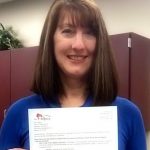
Inside the envelope was a conference brochure, and a letter addressed to me. The letter said I had been chosen as the “Star of the Region” for Region 9.
Say what??!!
I was so surprised I had to read the letter twice.
It was the same the second time: I was the chosen recipient of the Star of the Region Award for Region 9.
Wow! I had no idea I was even being considered. I was honored, flattered, surprised, and thankful to whomever had suggested me.
The awards for all 17 regions were being presented at the WFCCA conference in Wisconsin Dells. Unfortunately it was the same Friday night as Teacher’s play, so he couldn’t go with me. Teacher was recently in a community theater production of “Cheaper by the Dozen,” but that’s another post.
I really didn’t want to go alone and thought about asking Dee to come with me, but since it was just a week before her wedding to Uncle Jay I figured she’d be a little bit busy.
Dorothy and Nicole to the rescue!
They agreed to come along, even though it meant leaving work early maybe not such a hardship, and driving 5 hours round-trip on a Friday night.
Not long after the reception began the awards were presented, beginning with Region 1. Each regional representative presented the award to their Star.
Of course we had to stop at Starbucks before heading home. Not only is Starbucks one of my favorite places, it’s Dorothy’s second home; our local Starbucks know what to make when she orders a “Dorothy.” Venti seven-pump sugar-free vanilla Americano. I think; she rattles it off so fast I can’t catch it all.
Nicole despises coffee, but loves strawberry frappes. This was her lucky day night; the barista over-poured when making Nicole’s frappe so she got the leftovers for free!
Not many friends will give up a Friday night to drive 2 1/2 hours, sit around at a reception for an hour, then drive 2 1/2 hours back home again. I’m truly blessed to have Dorothy and Nicole in my life.
Thanks ladies, you’re the best!

It’s Nicole’s Fault
This stack of gorgeousness is all Nicole’s fault.
Really and truly!
OK, to be honest, she did have some help from Dorothy and Ikea.
But it’s mostly her fault.
Here’s what happened…
I’d heard about Ikea before, but since we don’t have an Ikea store near us I didn’t think about it much until I needed to get a new high chair for Peanut.
That wasn’t Nicole’s fault – her part comes later.
I knew exactly what I wanted, and an extensive search led me to Ikea. I ordered the high chair, it arrived and I love it, but I didn’t think about Ikea again, until the dishes thing.
We’re getting to the part where it’s Nicole’s fault.
Several years ago I’d bought three sets of smaller Tupperware plates I think they were salad or dessert plates and I loved them, but they only came pink, orange, green and blue. I like to have each child always use the same color of plate, cup, and bowl so there’s no fussing about who gets what color at mealtimes, but the plate colors didn’t match the colors of the Tupperware cups I already had.
I know, I know – it’s a small thing, but it really bugged me!
Another problem was that the Tupperware bowls were waaaaay too big for children’s portion sizes. I’ve been attending workshops on the prevention of childhood obesity and portion size is important, so I’ve started keeping a closer eye on the children’s portion sizes.
The kids didn’t seem to appreciate my concern for their health. I’d dish out their 1/4 cup of oatmeal – the minimum portion for a two year old – and they’d look at their bowl, then at me. I could hear them thinking “Seriously – that’s all I get?” Of course they were offered seconds and sometimes thirds, but the bowls were just so big it made their servings look miniscule.
I decided to get new dishes, but didn’t know where to look.
This is where it’s Nicole’s fault.
Nicole took a weekend trip to the Chicago area to visit friends and go to Ikea. She came back raving about all the cool stuff Ikea had; especially the children’s dishes. She knew I was looking for smaller bowls, different colors, and cheap; Ikea had smaller bowls, in sets of six different colors, for just $1.99 per set.
What a deal!
Teacher and I love Chicago and would love to take the kids there for a weekend, but when? With all the activities our family has going on we wouldn’t recognize a free weekend if it came up and bit us on the nose.
With my usual impatience I wanted the dishes NOW, but consoled myself with the thought that maybe over the summer we could take a day trip to Chicago. In the meantime I filed “Ikea Dishes” away under “Things to Do Someday When There’s Time” – cross-referenced with “Keep an Eye Out for Anyone Going to Ikea.”
It’s still Nicole’s fault…
Our friend Dorothy decided to take a road trip to Ikea to look at some shelves, and when Nicole found out about the trip she told me right away. We both asked Dorothy to pick up some things for us: cups for Nicole and obviously dishes for me.
As excited as I was, Z-Man, Little Guy and Peanut were even more excited when I brought them home. They dug right in and started ripping open the plastic packaging. There were plates, bowls and cups flying everywhere!
Before all the packages were opened Z-Man started sorting by color; setting aside all the dishes in his favorite color: orange.
Little Guy did the same, except he grabbed the green ones.
Even little Peanut got into the act, looking for all the pink ones.
I guess I know what colors are taken.
Aren’t they pretty? I love the bright colors, and the size is perfect for children. I only wish I’d gotten the matching plastic forks, spoons and knives. They would have been just adorable!
Guess we’ll need to take a summer day trip to Chicago anyway.
And it was all Nicole’s fault.
Thanks Nicole!

It’s Easy to Apply Vinyl Lettering!
It’s easier than you can imagine to apply vinyl lettering, and to prove it I took pictures of the very first time I ever applied vinyl lettering in my whole life!
But first, a little background…
This is my friend Carie who in addition to being beautiful is an Uppercase Living demonstrator. She introduced me to the wonderful world of vinyl lettering. To be honest, I’ve been aware of vinyl letting for a while, but thought it was tacky until I saw some “up close and personal” at her house.
I became obsessed with the idea of putting “Welcome” on the child care entrance aka our back door to greet the children and their parents.
I’ve dabbled in graphics for a couple of years and have collected more fonts than I can name, so at first I thought I’d find a pretty font and paint “Welcome” on the door myself. Then I realized that the brush strokes would probably still be visible under a new coat of paint if we ever decided to paint over it.
Not to mention that’s a lot of work, and I’m more about quick and easy.
Shortly afterward I discovered that Uppercase Living was offering a free holiday greeting with every purchase. Two for the price of one and much less work? I couldn’t resist!
When the “expressions” as the Uppercase Living catalog calls it arrived I began to worry about applying the vinyl lettering. Even though I’d measured the door and Carie showed me how to do it I was afraid of messing it up.
I read the directions four times, then gathered supplies: tape, scissors, the “scraper” that came with my order, and the vinyl lettering, of course.
First you’re supposed to rub both sides of the vinyl lettering with the scraper tool or a credit card, to help the lettering come off the paper.
Next you have to determine placement and take the backing off.
There are two ways to do this: slowly and carefully pull the backing off at a 45 degree angle, or use the “hinge” method.
Determining placement was actually the hardest step for me, because the whole thing with paper attached was bigger than the part of the door where I wanted to put it. Since I’m a dork and didn’t want to write on the just-painted-last-summer door I used Post-It notes to mark the centers.
After re-reading this section again I decided to try the “hinge” method because it seemed more fool-proof. Once you’ve determined placement, tape the expression in place along the top; keeping all the layers in place.
Once your vinyl lettering is securely taped in place, carefully flip the whole thing up and beginning at a corner, slowly peel the backing off at a 45 degree angle.
This is where I got into trouble – my tape “hinges” didn’t have much door to hold on to so they let go as I peeled the backing off. It finally came all the way off the door and I ended up holding the sticky top layer with lettering attached, terrified that it would fold over onto itself and fuse together into a gummy mess.
Eyeballing it as best I could, I carefully centered the expression, then smoothed the lettering and sticky paper onto the door with my fingers. I ended up with some wrinkles and bubbles in the top layer but didn’t worry about them as long as the lettering was smooth.
Next, use the scraper to rub the letters onto your surface so they’ll stick when you peel the top layer of paper off. Make sure you get all the edges and corners!
Again beginning at a corner and working at a 45 degree angle, slowly peel the top layer away from the vinyl lettering. If any of the lettering sticks to the top layer simply smooth the top layer back, rub with the scraper, and try again.
I learned that the tops of all the letters had to be rubbed down REALLY hard or they wouldn’t stick to the door.
Almost done!
Now for the test… because of the doorknob I wasn’t worried if my “Welcome” wasn’t perfectly centered side-to-side, but I certainly didn’t want it slanting up or down!
One inch below the first “e” …
One inch below the second “e” – I did it! Even eyeballing it I got it straight.
Whew!
Ta-da! Isn’t it pretty?
I especially love how it fits perfectly inside the screen door – it’s almost like a frame.
See, I promised that it’s easy to apply vinyl lettering!
Do you have any vinyl lettering in your house, or are you planning to get some? I still want some along the soffit in my kitchen, but haven’t decided what I want it to say yet… got any ideas?

One Little, Two Little, NO Little Indians
I try very hard to offer an anti-bias child care program but I know I still miss the mark sometimes. Some habits are so ingrained in me that I don’t even notice them until someone points them out. It’s like those “Claritin Clear” commercials – you think you’re seeing clearly until they lift the film and all the colors get brighter and clearer. We think we’re doing a good job being culturally sensitive until the film is pulled back and we see something we’d always taken for granted in a new light.
I had my personal film pulled back in one of the workshops I went to at the WECA conference – “I is not for ‘Indian’.”
I’ve known for a long time that certain things should be avoided, like using the term “Indian” to describe Native Americans, the song “One Little, Two, Little, Three Little Indians,” saying “Indian Corn” instead of “maize,” using the term “Indian giver,” and sitting “Indian style” instead of “pretzel legs.”
I also knew that “Cowboys and Indians” was a big no-no, but at the workshop I learned a new reason why: “Cowboys and Indians” isn’t just a game where one military goes against another; it’s an occupation (cowboys) vs a whole people (Native Americans). It would be like playing “Cowboys vs Blacks” or “Cowboys vs Women” – can you imagine the outrage if children were playing either of those games?
At the workshop I also learned the best way to handle the “First Thanksgiving” – something I’ve struggled with for a long time. On the one hand I’ve felt that I should talk about the friendship between the “Pilgrims and Indians” with the children, but on the other hand I knew that the traditional “Pilgrims and Indians” that I grew up with and that are still present in many schools is wrong.
I learned that the best way to handle the “First Thanksgiving” is to not go there.
Just skip the whole “First Thanksgiving with the Pilgrims and Indians” thing, and focus on the things we’re thankful for in our lives. Things like our mommys, daddys, brothers, sisters, friends, pets, yummy food, favorite toys, etc.
Skip the stereotypical pilgrim and Indians, and decorate with turkeys and cornucopias like these great floral ones instead. Replace the paper bag “Indian vest” craft with paper bag turkeys or paper bag pumpkins.
It makes a lot of sense when you stop to think about it; most of us celebrate Halloween and Valentine’s Day very happily without a history lesson about the “First Halloween” or “First Valentine’s Day” don’t we?
If you feel the need to address the First Thanksgiving, or are wondering how to accurately reflect Native American culture, check out www.Oyate.com. There’s a whole page of Thanksgiving resources, plus books to order and criteria for evaluating books you may already own.
Sorry Maurice Sendak, as much as I love you, “Imitating Indians” is not what I want my children to think Native American culture is!
I want my children – and the children I care for – to learn about the wonderfully rich, complex, and diverse culture of real Native American tribes.
Now where did I put those brown paper bags?